Beyond the Nice Lunch: Engineering Executive Book Clubs That Produce Measurable Business Results
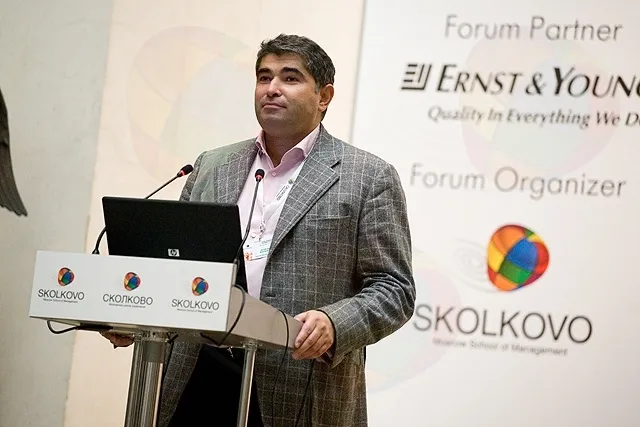
Photo: Moscow School of Management SKOLKOVO, CC BY-SA 3.0, via Wikimedia Commons
The executive book club has become a fixture of American corporate culture, and for understandable reasons. It signals intellectual seriousness. It creates informal cross-functional connection. It offers a structured reason for senior leaders to step away from operational urgency and think at a longer horizon. These are genuine benefits, and they should not be dismissed.
But if you ask the honest question — does this book club change how we make decisions? — the answer, in most organizations, is no. The conversation is stimulating. The catering is adequate. And by the following Monday, the strategic implications of whatever was discussed have been absorbed back into the current of day-to-day business without leaving a visible mark.
The problem is not the concept. The problem is the design.
Why Most Corporate Book Clubs Underdeliver
The typical executive book club is structured around social comfort rather than strategic output. A book is selected — usually by whoever has the most enthusiasm or the most seniority — and participants arrive having read varying portions of it, prepared to share impressions rather than conclusions. The facilitator, if there is one, manages the room rather than drives toward a decision. The session ends with general agreement that the book was thought-provoking. No one is assigned anything. Nothing changes.
This format reflects a category error: treating a book club as a cultural program rather than a decision-making forum. The social benefits are real, but they are a byproduct, not the product. Organizations that extract genuine strategic value from collective reading understand this distinction and design accordingly.
Research on group decision-making suggests that unstructured discussion actually tends to reinforce existing consensus rather than surface genuinely new strategic options. Without deliberate facilitation toward a specific organizational question, a book club conversation is more likely to validate what leadership already believes than to challenge it.
The Four Design Principles of High-Impact Book Clubs
Companies that have successfully converted collective reading into competitive advantage — including several mid-market firms and at least one Fortune 500 organization profiled in recent management literature — share four structural commitments that distinguish their approach.
1. The book serves the question, not the other way around.
In most book clubs, the book is the starting point. In high-performing organizations, the strategic question comes first. Leadership identifies a live challenge — how to approach a market entry decision, how to restructure a leadership pipeline, how to respond to a disruptive competitor — and then selects a book that offers a relevant framework or counterpoint. The reading is assigned in service of a decision, which means every discussion has a natural terminus: an implication for action.
This inversion sounds simple, but it requires discipline. It means resisting the temptation to read broadly and instead reading purposefully. It also means that the book club calendar is coordinated with the strategic planning calendar, not treated as a separate cultural initiative.
2. Accountability is built into the structure, not assumed.
High-impact book clubs assign specific roles before the session begins. One participant is designated to argue against the book's central premise. Another is tasked with identifying the three organizational decisions most directly affected by the book's framework. A third prepares a one-page brief connecting the reading to a current company initiative. These pre-assigned roles ensure that the conversation begins at a level of analytical depth that open discussion rarely reaches organically.
Post-session accountability is equally important. Every meeting should end with explicit assignments: who will draft a proposal based on today's discussion, who will research the counterarguments raised, and when the group will reconvene to review what was implemented. Without this structure, insights evaporate as quickly from group settings as they do from individual reading.
3. The group is composed for productive tension, not harmony.
Many executive book clubs are populated by people who already agree with each other on most things. This is comfortable and largely unproductive. Organizations that use collective reading to sharpen strategy deliberately include voices from different functional backgrounds, career stages, and — where possible — different points of view on the organization's current direction.
One approach that has gained traction in several US-based professional services firms is the inclusion of a rotating "challenger" seat, occupied by a mid-level manager or high-potential individual contributor who is asked explicitly to push back on senior leadership assumptions surfaced during the discussion. The power asymmetry is acknowledged and managed, but the friction it generates is treated as a feature rather than a problem.
4. Output is defined before the session, not after.
The most consistently effective book clubs specify what they are trying to produce before the first discussion takes place. Possible outputs include: a one-page strategic brief to be shared with the board, a revised assumption in the company's annual planning document, a new hypothesis to be tested in a specific market, or a decision to pilot a practice described in the book in one business unit before broader adoption.
Defining the output in advance shapes the entire discussion. Participants read differently when they know they are working toward a specific deliverable. The conversation stays closer to the ground. And the session ends with something tangible rather than a collective sense of intellectual satisfaction that dissipates by Thursday.
A Case in Structure: What One Regional Bank Did Differently
A regional bank in the Midwest — a mid-sized institution navigating the dual pressures of fintech competition and succession planning — restructured its executive book club three years ago after an honest internal assessment concluded that the existing format was generating goodwill but not strategy.
The redesign was straightforward. The bank's leadership team identified four strategic questions for the year and assigned one book per quarter to each question. Sessions were capped at 90 minutes and facilitated by an outside advisor to neutralize hierarchy effects. Each session produced a two-page brief, reviewed at the subsequent board meeting, identifying at least one decision the reading had influenced.
Within 18 months, two significant organizational changes — a restructured onboarding process for commercial lending clients and a revised framework for evaluating branch performance — were directly traceable to book club discussions. The CFO described the redesigned format as "the only recurring meeting where we actually change our minds about something."
Translating Group Insight into Organizational Strategy
The final challenge for any executive book club is the translation problem: how does a conversation among eight or ten senior leaders produce change at an organizational scale? The answer lies in treating the book club as the beginning of a process rather than the end of one.
Insights generated in discussion need formal pathways into existing decision-making structures: strategy offsites, operating reviews, talent planning sessions. Without these pathways, even the most productive book club conversation remains contained within the room where it happened.
At AdvisorsBooks, we hold that expert knowledge reaches its full value only when it moves from the page into the processes and decisions that shape an organization. A well-designed executive book club is one of the most efficient mechanisms available for making that transfer happen at scale — but only when it is engineered for output rather than assembled for conversation.